
Chickadees are genuine omnivores with a diet that shifts dramatically across the year — insect-heavy during the breeding season, seed- and cache-heavy through fall and winter — and a feeding behavior at the feeder itself that looks nothing like most other backyard birds.
This site participates in affiliate programs. If you buy through a link on this page, we may earn a commission at no extra cost to you. Affiliate disclosure
Breeding Season: An Insect-Heavy Diet
Through spring and summer, insects and spiders make up the majority of the diet, and caterpillars in particular are essential for raising chicks — a single brood can require several thousand caterpillars over the course of the nestling period. This insect dependency during breeding season is comparable in importance to what bluebirds rely on, even though adult chickadees eat a much broader diet overall.
Fall and Winter: The Shift Toward Seeds and Cached Food
As insect availability drops with cooling weather, chickadees shift heavily toward seeds, berries, and previously cached food. Fall is also peak caching season, tying directly into the seasonal memory adaptation covered in our lifespan guide — chickadees spend much of autumn hiding food in numerous scattered locations to draw on later in winter.
The One-Seed-at-a-Time Feeding Style
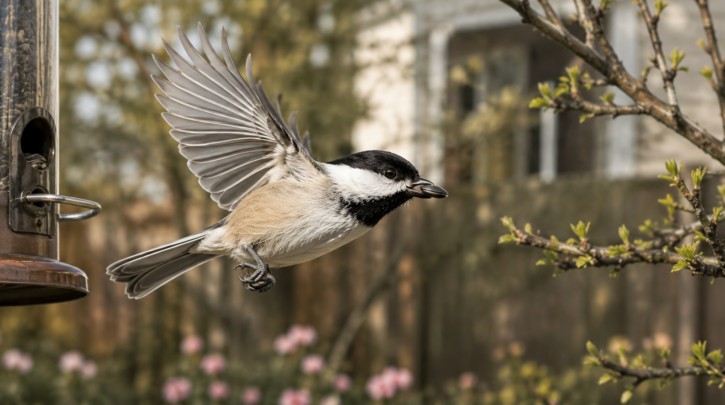
Unlike a goldfinch or House Finch that lingers at a feeder cracking and eating seed after seed in place, chickadees typically grab a single seed, fly to a nearby perch, and either eat it immediately or cache it for later before returning for another. This behavior is genuinely distinctive among common feeder birds and explains why a chickadee visit often looks like a quick in-and-out trip rather than a lingering feeding session.
Caching From Feeders, Not Just Wild Food
Chickadees don’t limit caching to naturally foraged food — sunflower seed and other feeder food gets cached just as readily as anything gathered in the wild, hidden in bark crevices, under lichen, or in ground litter within the bird’s home range, then relocated later using the spatial memory system covered in our lifespan guide.
Favorite Feeder Foods
- Black oil sunflower seed — a consistent favorite, preferred over striped sunflower for its thinner shell and higher fat content
- Peanuts, shelled or chopped — a high-fat, high-protein option especially valuable in winter
- Suet — reliably taken year-round, with particularly heavy use in cold weather
- Mealworms — taken opportunistically, though less central to chickadee feeding than they are for bluebirds
A chickadee visiting a feeder rarely lingers — grab one seed, fly off to eat or cache it, then come right back for another. It’s a fundamentally different feeding rhythm than a finch settling in for a longer meal.
That quick rhythm is hard to follow by eye, which is where a camera feeder like the Birdfy Feeder helps: it catches each grab-and-go visit and identifies the bird automatically.
Why Insects Matter So Much During Breeding Season
Because chick-rearing depends so heavily on caterpillars specifically, properties that support healthy caterpillar populations do more for chickadee reproductive success than feeder food ever could during the spring and early summer nesting window. See our attracting guide for the native plant choices that support this most directly.
Ready to set up a feeder that matches this feeding style? See our feeder setup guide for why chickadees don’t need the specialized designs some other backyard birds require.
Water Needs
Like most backyard birds, chickadees benefit from a reliable water source for drinking and bathing, particularly during hot, dry stretches or when natural water is scarce in winter.
How Diet Differs Across the Five Species
While the general insect-then-seed pattern holds broadly across Black-capped, Carolina, Mountain, Boreal, and Chestnut-backed Chickadees, some regional variation exists depending on local habitat. Boreal Chickadee, breeding in far northern conifer forest with a shorter insect season, relies more heavily on cached conifer seed through its long winter than the more temperate Black-capped or Carolina populations do.
Chestnut-backed and Coastal Forest Diet
Chestnut-backed Chickadee, living in Pacific coastal conifer forest, draws heavily on the insect and seed resources typical of that specific ecosystem, including conifer seed sources that play a smaller role in the diet of chickadees living in deciduous-forest-dominated eastern ranges.
Why This Diet Flexibility Matters
The ability to shift so completely between an insect-dominant diet in summer and a seed- and cache-dominant diet in winter is a major reason chickadees remain resident year-round across most of their range rather than needing to migrate the way a more strictly insectivorous species might. This dietary flexibility, covered further in our migration guide, is a genuine survival advantage.
A Diet Built Around Two Very Different Seasons
Few backyard birds show quite this dramatic a seasonal shift in feeding strategy while still remaining in the same general location year-round — chickadees essentially run two different feeding operations depending on the time of year, insect-hunting specialists in summer and seed-caching specialists in winter, without ever leaving the neighborhood.