
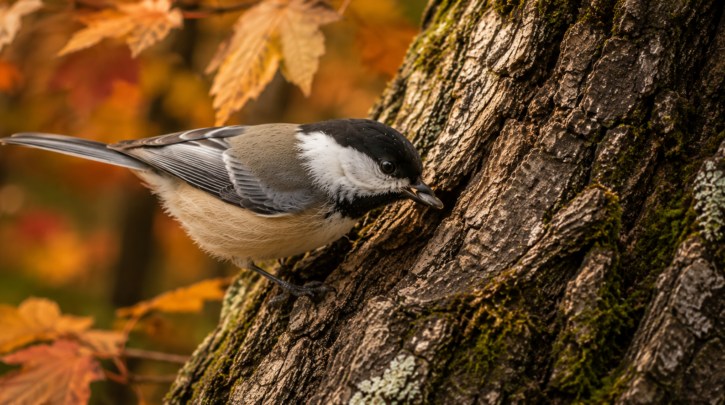

Fall is genuinely the most cognitively demanding season of the chickadee year — this is when scatter-hoarding ramps up dramatically, and the seasonal brain change supporting it becomes measurable.
This site participates in affiliate programs. If you buy through a link on this page, we may earn a commission at no extra cost to you. Affiliate disclosure
Peak Caching Season
Chickadees cache thousands of individual food items throughout fall, each hidden in a separate location across their home range, drawing on the spatial memory system covered in our lifespan guide to relocate a meaningful share of them later in winter.
The Hippocampus at Work
This is the season when the seasonal hippocampal growth described in our lifespan guide actually happens — new neuron growth supporting the memory capacity needed to track an enormous number of individual cache locations, a genuinely measurable seasonal change in brain structure tied directly to this specific behavior.
Completing the Post-Breeding Molt
The molt begun in late summer typically finishes during fall, leaving adults in fresh plumage heading into winter. Because chickadees are largely resident, this molt can proceed without the time pressure a migratory species would face.
Flocks Begin Reforming
As family groups from summer breeding disperse, chickadees begin forming the mixed winter flocks covered in our winter survival guide, with the dominance hierarchy that will govern winter feeding access starting to establish itself during this transitional period.
Occasional Irruptive Movement
For northern populations, particularly Black-capped and Boreal Chickadee, fall is when the occasional irregular southward movement covered in our migration guide might begin, though this happens far less predictably than the well-documented finch irruptions.
Watching for Larger-Than-Usual Flocks
A noticeably larger flock at a feeder in fall, especially in northern latitudes, can be a sign of exactly this kind of irregular movement rather than simply a good year for the local resident population.
Preparing Feeders for Winter Demand
Because suet and seed feeder activity typically peaks in winter, fall is a sensible time to make sure feeders are clean and well stocked ahead of the season’s heaviest demand. See our suet and seed guide for what matters most as natural food becomes scarcer.
Want to know what a fully formed winter flock actually looks like day to day? See our winter survival guide for the complete picture.
If you’re adding a feeder before winter, our pick for chickadees is the Birdfy Feeder, a smart feeder that records and identifies every visitor.
A Season That Sets Up the Rest of Winter
Nearly everything that determines winter survival — cache quantity, flock rank, molt completion — gets established or finalized during fall, making this quieter-seeming season genuinely more consequential than its modest outward activity might suggest.
A Season Worth Documenting
Keeping simple notes on feeder activity through fall, particularly any unusual increase in flock size, can help build a useful personal record over multiple years for spotting the kind of irregular movement patterns that are otherwise easy to miss without a formal regional forecast to compare against.
Comparing Fall to Other Species
Fall looks meaningfully different depending on which species a host is watching — an oriole host’s fall centers on frantic pre-migration fueling before a complete seasonal absence, while a chickadee host’s fall is a quieter, internal process of caching and cognitive change that’s far less visible from the outside despite being genuinely significant.
A Good Time for Habitat Assessment
With breeding activity fully wrapped up, fall is a reasonable time to assess whether existing native plantings and retained dead wood are genuinely supporting the caching and insect needs covered elsewhere on this site, and to plan any adjustments before the following spring’s nesting season arrives.
Fruit and Seed Availability Varies by Year
Natural seed and insect availability can vary meaningfully from year to year, and a particularly poor fall can push chickadees toward heavier reliance on feeder suet and seed earlier in the season than usual, making consistent feeder maintenance especially valuable during a lean year.
A Season Worth Watching Quietly
Because so much of fall chickadee activity is internal — caching, molting, subtle hierarchy formation — patient, regular observation over the course of the whole season reveals far more than any single visit could, making fall a genuinely rewarding stretch for a dedicated backyard observer willing to look closely and consistently over time.
Final Thoughts
Fall may be the quietest season to watch on the surface, but it’s arguably the most biologically important — quietly setting the stage for everything winter will demand, in ways that are easy to overlook without a closer look at what’s genuinely happening beneath the surface.