
Chickadees are genuinely unfussy about feeder design compared to many of the other species — no tail-prop requirement, no tiny specialized ports, no elaborate excavation substrate. A standard feeder setup works well right out of the box.
Why Chickadees Are Easy to Accommodate
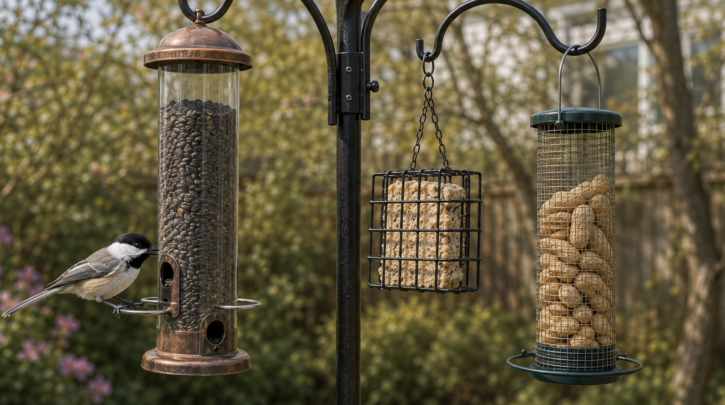
Because chickadees are small, agile, and comfortable clinging with or without a perch, they can use feeder designs built for species ranging from finches to larger songbirds without any trouble. A standard tube feeder, hopper feeder, or suet cage all work well without needing any chickadee-specific modification.
Tube and Hopper Feeders for Sunflower
A standard tube or hopper feeder loaded with black oil sunflower covers the foundation of chickadee feeding. Because chickadees take one seed and leave rather than settling in, port size matters less here than it does for a species that needs to sit and crack multiple seeds in place.
Suet Feeders
A simple wire suet cage works well without needing the tail-prop board a woodpecker feeder benefits from, since chickadees are lighter and more acrobatic, comfortable clinging directly to the cage itself without requiring additional bracing.
Peanut Feeders
A mesh tube filled with shelled or chopped peanuts is a genuinely effective addition, offering a high-fat food source chickadees take readily alongside sunflower and suet.
Chickadees Often Visit First
It’s a commonly observed pattern that chickadees are among the first species to discover and commit to a brand-new feeder, effectively scouting it before other, more cautious species follow their lead. A new feeder attracting chickadee interest within the first few days is a good sign the location and setup are reasonable.
Placement Tips
- Position within reach of trees or shrubs, since chickadees prefer quick access to cover both for safety and for caching food nearby
- Keep suet in partial shade to slow spoilage in warm weather
- Space feeders reasonably to reduce crowding if hosting a larger local flock
A Note on Hand-Feeding
Chickadees are famously among the easiest wild birds to hand-feed, readily taking sunflower seed directly from an open palm with enough patience and consistency. See our window feeder guide for gear built specifically around this close-up, hand-feeding-friendly relationship.
Cleaning and Maintenance
Standard feeder hygiene — regular cleaning, prompt removal of wet or moldy seed, dry storage between refills — keeps a chickadee feeding station healthy without requiring any of the more intensive disease-specific protocols relevant to House Finch feeding.
Pair a feeder with the right habitat for the biggest impact — see our attracting guide for the trees and shrubs that support chickadees well beyond the feeder itself.
Feeder Materials
Standard metal or wood-and-metal feeder construction holds up well to chickadee use, since this species doesn’t exert the kind of forceful pecking pressure a woodpecker does on a feeder surface. Durability concerns here are more about general weather resistance than about withstanding a particularly strong bill.
Combining Multiple Food Types
A feeding station running a sunflower tube feeder, a suet cage, and a peanut feeder together gives chickadees full access to their preferred foods in one general area, while also drawing a wider range of other backyard species that share overlapping food preferences.
Mounting Height
A height of roughly five to seven feet works well for most yards, balancing easy viewing and maintenance access against reasonable protection from ground-level predators.
Squirrel Considerations
Sunflower and peanut feeders both attract squirrels as readily as suet does, so a pole-mounted setup with a baffle, or a weight-activated feeder design, helps keep food available for the birds it’s intended for rather than being cleaned out repeatedly by squirrel activity.
Feeder Longevity
A well-built feeder, cleaned and maintained on a reasonable schedule, can last many seasons of regular chickadee use without needing replacement, particularly for metal or metal-reinforced designs that hold up better to weather exposure than plain plastic alternatives over time.
A Feeder Setup That Grows With Experience
Many hosts start with a single sunflower feeder and gradually add a suet cage and peanut feeder once chickadee activity is confirmed and consistent, rather than investing in a full multi-food setup before knowing how much local chickadee traffic to realistically expect in a given yard.
Final Thoughts
A correctly stocked sunflower feeder and a clean suet cage, positioned near some natural cover, will draw chickadees in most regions faster and more reliably than almost any other backyard bird throughout this entire ongoing calendar year.