
 Written by: Justin Roberts
Posted on: July 4, 2026
Written by: Justin Roberts
Posted on: July 4, 2026
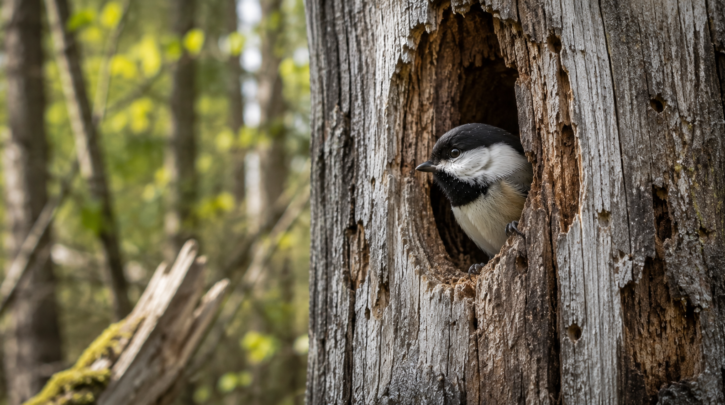
Old Woodpecker Cavities and Nest Boxes: How Chickadees Use Both
Chickadees sit right at the center of one of the more interesting ecological relationships: they’re one of the most direct beneficiaries of the excavation work woodpeckers leave behind. This site participates in affiliate programs. If you buy through a link on this page, we may…
 Written by: Justin Roberts
Posted on: July 4, 2026
Written by: Justin Roberts
Posted on: July 4, 2026
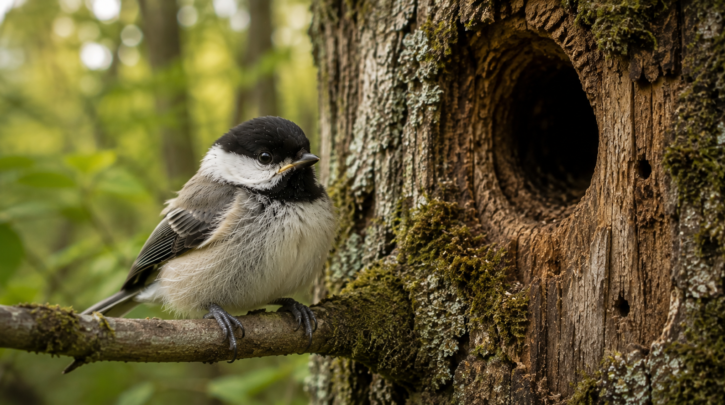
Baby Chickadees: Raising a Brood of Six to Eight
A chickadee brood of six to eight chicks is considerably larger than most other cavity-nesting songbirds attempt at once, and feeding that many growing chicks becomes a genuinely demanding, nearly nonstop effort for both parents. At Hatching Newly hatched chickadees are altricial: blind, featherless, and…
 Written by: Justin Roberts
Posted on: July 4, 2026
Written by: Justin Roberts
Posted on: July 4, 2026
Chickadee Habitat and Range: Where Each Species Lives
Between them, the five common chickadee species cover nearly every forested region of North America, from suburban deciduous woodland to the edge of the Arctic tree line. Black-capped Chickadee Found across most of Canada and the northern half of the United States, in deciduous and…
 Written by: Justin Roberts
Posted on: July 4, 2026
Written by: Justin Roberts
Posted on: July 4, 2026
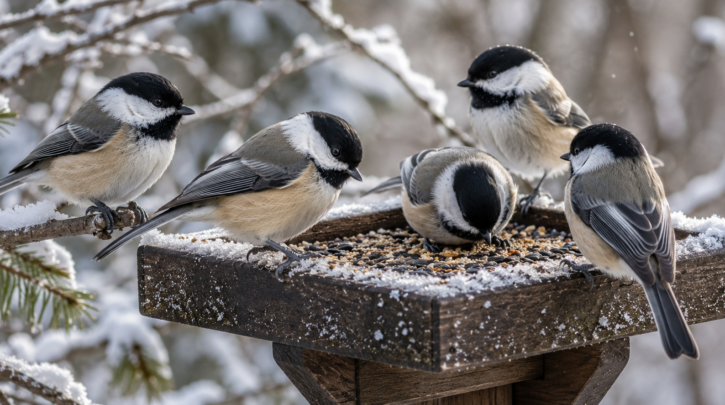
Do Chickadees Migrate? Mostly Resident, With Occasional Irruptions
Chickadees don’t fit neatly into a single migration category of birds — they’re primarily non-migratory residents, like woodpeckers, but with an occasional irruptive tendency more reminiscent of winter finches. Mostly Resident, Like Woodpeckers Across most of their range, all five chickadee species stay in the…
 Written by: Justin Roberts
Posted on: July 4, 2026
Written by: Justin Roberts
Posted on: July 4, 2026
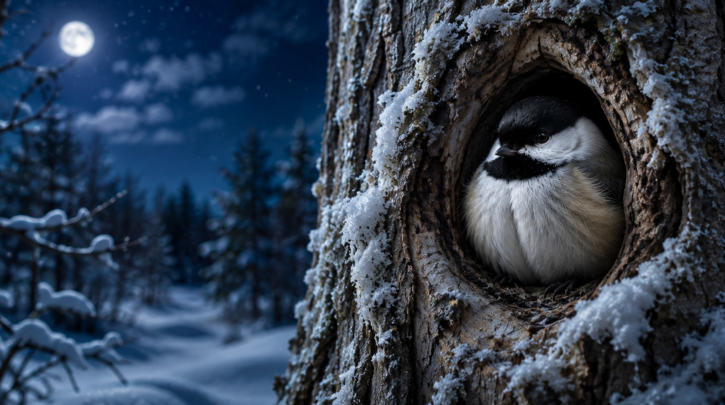
How Chickadees Survive Winter: Torpor, Caching & Flock Rank
A bird this small surviving genuinely brutal winter nights seems almost implausible without understanding the specific combination of adaptations chickadees rely on — not one single trick, but several working together. This site participates in affiliate programs. If you buy through a link on this…
Written by: Justin Roberts
Posted on: July 4, 2026
Chickadee FAQ: Common Questions Answered
A roundup of the questions we hear most often from people feeding or watching chickadees for the first time. This site participates in affiliate programs. If you buy through a link on this page, we may earn a commission at no extra cost to you….
 Written by: Justin Roberts
Posted on: July 4, 2026
Written by: Justin Roberts
Posted on: July 4, 2026
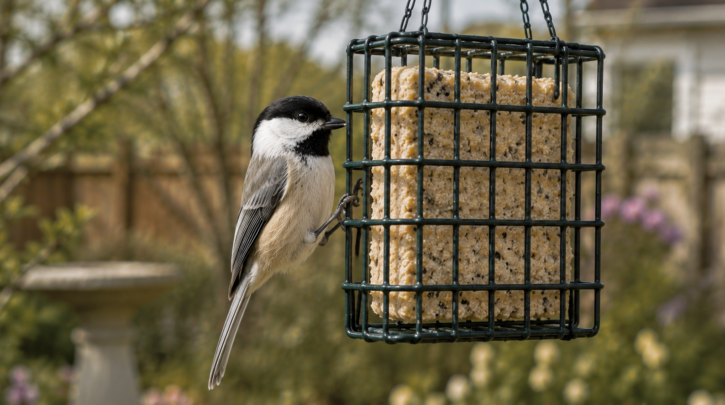
Best Suet Feeders for Chickadees: Our Top Picks
Suet feeder shopping for chickadees is genuinely simpler than it is for some other backyard birds — no tail-prop board, no specialized excavation substrate, just a solid cage a small, agile bird can cling to comfortably. See our full feeder setup guide for why this…
 Written by: Justin Roberts
Posted on: July 4, 2026
Written by: Justin Roberts
Posted on: July 4, 2026
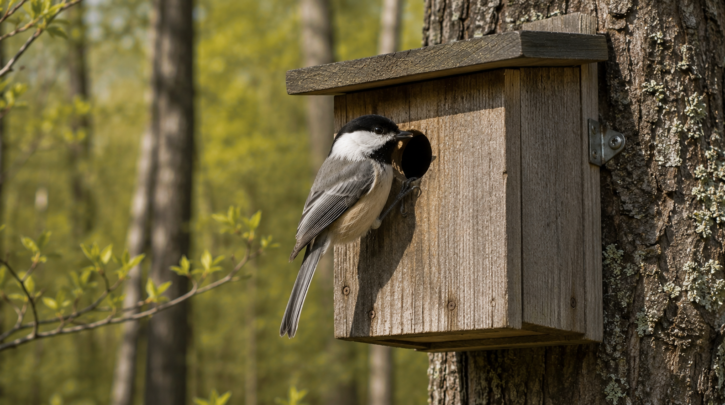
Best Chickadee Nest Boxes: Our Top Picks
A leftover bluebird box won’t serve chickadees well — the entrance hole is simply too large. Our top pick is the Birdfy Nest Duo, a camera nest box that comes with a chickadee-sized entrance, followed by two simpler wooden boxes. See our full nest cavity…
 Written by: Justin Roberts
Posted on: July 4, 2026
Written by: Justin Roberts
Posted on: July 4, 2026
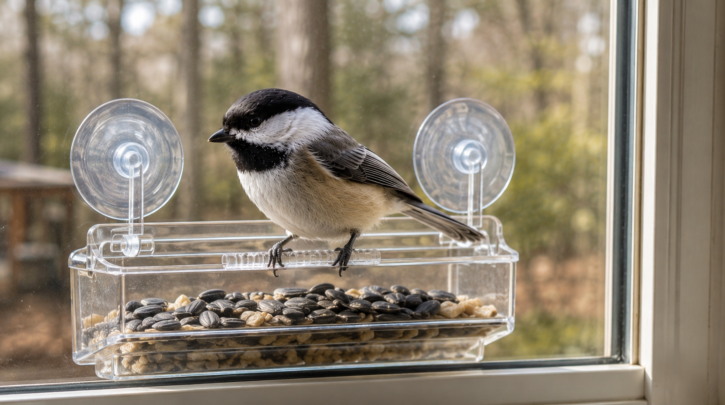
Best Window Feeders for Chickadees
Few backyard birds tolerate close human presence as readily as chickadees do, which makes this species a natural fit for window feeders — and for hosts patient enough to work toward genuine hand-feeding. What We Looked For Duncraft Classic Window Feeder An affordable, straightforward suction-mounted…
 Written by: Justin Roberts
Posted on: July 4, 2026
Written by: Justin Roberts
Posted on: July 4, 2026
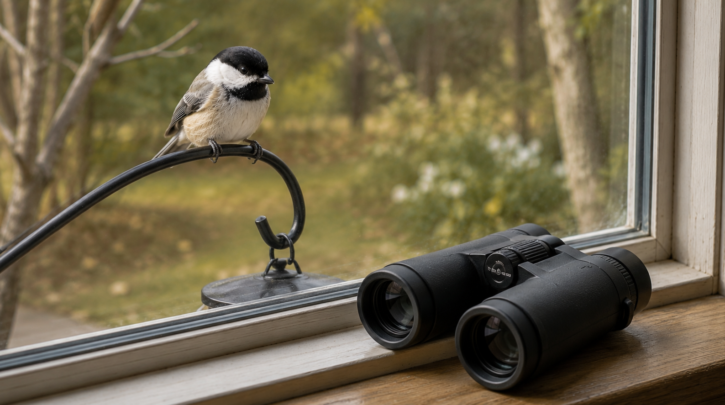
Best Binoculars for Chickadee Watching: What I Learned the Day One Landed Three Feet Away
The chickadee landed on the shepherd’s hook holding my window feeder, about three feet from the glass, and I did what anyone with a brand-new pair of binoculars would do: I lifted them straight to my eyes. What I got was a soft, unfocusable gray-and-black…