
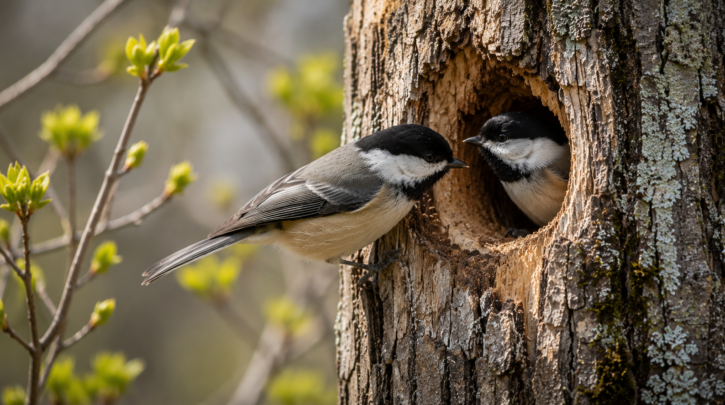

Unlike a species that pairs up fresh each spring, chickadees often arrive at spring already matched — pair bonds frequently form within the winter flock itself, well before territory and nesting become the priority.
This site participates in affiliate programs. If you buy through a link on this page, we may earn a commission at no extra cost to you. Affiliate disclosure
Pairing: Already Underway Before Spring Begins
As covered in our FAQ, chickadee pairs often form during late winter, while birds are still part of a mixed dominance-ranked flock. By the time spring arrives, many pairs are simply transitioning from flock membership to active territory establishment rather than starting the pairing process from scratch.
Territory and Song
Spring brings a noticeable increase in song and territorial activity as paired birds move away from the winter flock structure and establish a defended nesting territory. This is one of the more vocal stretches of the year for the species, useful for confirming which pairs have settled into a specific area.
Choosing a Nest Site
Once a territory is established, the pair begins evaluating potential nest sites — either soft, decayed wood suitable for self-excavation, or an existing cavity like an old woodpecker hole or nest box. See our nest cavity guide for the full excavate-or-reuse decision process.
Timing Feeders and Nest Boxes to Spring
Having a correctly sized nest box already in place before spring site-selection begins gives a pair an immediate option to consider, rather than waiting for the box to be discovered later in the season once other sites may already be claimed.
A camera nest box like the Birdfy Nest Duo lets you watch that decision play out, recording visits at the entrance and nest building inside.
Egg Laying Begins
Once a cavity is ready and the nest cup is complete, egg laying typically follows within days. See our eggs guide for the notably large clutch size this species commits to each spring.
Watching for the Snake-Mimicking Defense
Spring is when the startling hissing display covered in our nest cavity guide is most likely to be encountered, since it’s triggered by disturbance during incubation — a reminder to keep any nest box checks brief and infrequent during this period.
Once eggs appear, see our guide to baby chickadees and fledging for what a brood this large actually demands from both parents.
A Smoother Transition Than Many Other Species
Because pairing often happens before spring even begins, chickadees avoid some of the courtship-related delay and uncertainty seen in species that must find and secure a mate fresh each year, letting territory and nest-site decisions move forward more quickly once the season actually turns.
Regional Timing Differences
Exact spring timing varies by latitude, with southern Carolina Chickadee populations generally beginning territory establishment and nesting earlier than northern Black-capped or Boreal Chickadee populations, where a longer, colder winter delays the transition out of flock life.
Weather Setbacks in Early Spring
A late cold snap can temporarily delay nest-site selection or excavation, particularly for northern populations where spring weather remains genuinely variable. Because chickadees aren’t working against a migration deadline, a short delay of this kind generally has less consequence than it might for a species with a tighter overall seasonal window.
A Season Worth Watching Closely
Because so much of the pairing groundwork happens quietly during the preceding winter, spring itself offers a more compressed, visible window into territory and nest-site decisions than the courtship-heavy spring many other backyard birds experience.
Confirming an Active Pair
Watching for a pair investigating potential cavities together, rather than a single bird acting alone, is a reasonable early sign that pairing from the previous winter has genuinely carried through into an active nesting effort for the coming season.
A Useful Comparison Point
Species that must find a mate fresh each spring, like most orioles, spend real time and energy on courtship display before any nesting decision can begin. Chickadees skip much of that process, making their spring transition feel comparatively efficient once actually observed side by side with a more typical courtship-driven species.
A Season That Rewards Early Preparation
Because pairing has already happened by the time spring arrives, having feeders and nest boxes genuinely ready before the season begins pays off faster than it might for a species still working through courtship, since an already-paired chickadee can move straight to evaluating sites without any of the delay a fresh courtship process would otherwise require.
Final Thoughts
Spring in this family is less about starting fresh and more about picking up where winter left off — a genuinely distinctive rhythm compared to most other species, and one worth appreciating for how efficiently the whole season unfolds with far less courtship delay than most backyard birds experience.