
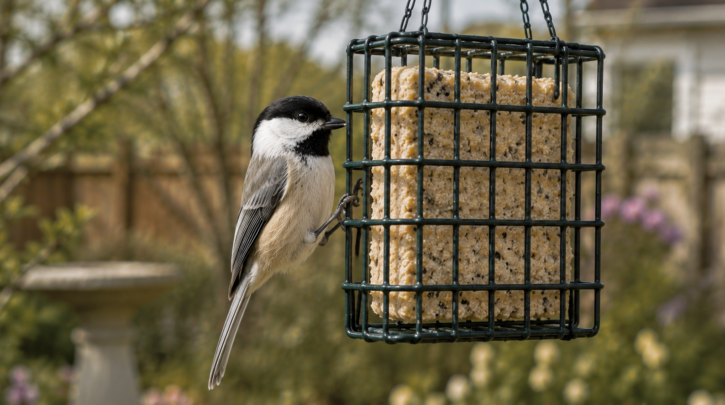

Suet feeder shopping for chickadees is genuinely simpler than it is for some other backyard birds — no tail-prop board, no specialized excavation substrate, just a solid cage a small, agile bird can cling to comfortably. See our full feeder setup guide for why this species asks so little of feeder design.
What We Looked For
- Sturdy wire cage construction able to hold up across multiple seasons
- A design simple enough for a small bird to grip without any additional bracing
- Reasonable weather protection to slow suet spoilage
- Easy disassembly for regular cleaning
Duncraft Suet Cage Feeders
A straightforward wire cage design that chickadees take to immediately, without needing any of the tail-prop features built into feeders marketed specifically for larger woodpecker species. The simple, no-frills design keeps cost down while covering everything a chickadee actually needs.
See: Duncraft Suet Cage Feeders
Squirrel-Resistant Options
Suet is just as appealing to squirrels as it is to chickadees, and a weight-activated design — sold under brands like Brome’s Squirrel Buster line and available through most major feeder retailers — automatically closes access when a squirrel’s weight is detected, while remaining fully open for a chickadee’s much lighter body.
See: Brome’s Squirrel Buster line
Why Weight-Based Exclusion Works So Well Here
Because chickadees weigh a small fraction of what a typical gray squirrel weighs, a weight-activated mechanism calibrated to exclude squirrels has essentially no effect on chickadee access, making this kind of feeder a genuinely elegant solution rather than a compromise that inconveniences the birds it’s meant to serve.
Combining Suet With Sunflower and Peanuts
A feeding station running a suet cage alongside a sunflower tube feeder and a peanut feeder covers the full range of chickadee preferences described in our suet and seed guide, all without requiring any specialized single feeder to do everything at once.
Ready to add a nest box to the same yard? See our nest box guide for the correct hole size that actually matters for this species.
Feeder Longevity
A well-built wire suet cage, cleaned regularly and kept out of standing water, can last many seasons of steady chickadee use without needing replacement, making it one of the more durable, low-maintenance investments.
A Simple Setup That Rarely Needs Upgrading
Because chickadees ask so little of a suet feeder’s design compared to some other species, most hosts find they never need to upgrade beyond a basic wire cage — the improvements worth paying for are almost entirely about durability and squirrel resistance rather than any feature specific to chickadee feeding behavior.
Pairing With a Nest Box Nearby
A suet feeder positioned within reasonable distance of a nest box or natural cavity gives a nesting pair a reliable, nearby food source during the demanding chick-rearing weeks, reducing the distance parents need to travel on each feeding trip.
Considering Multiple Feeding Stations
On a larger property, or one hosting more than one chickadee pair, spacing out two smaller suet stations rather than relying on a single central feeder can reduce competition and give each resident pair more convenient, low-stress access during the busiest parts of the breeding season.
Suet Placement Relative to Cover
Positioning a suet feeder within quick reach of shrub or tree cover gives visiting chickadees an immediate escape route from predators, consistent with the same general placement advice that applies to sunflower and peanut feeders covered in our feeder setup guide, and it costs nothing extra to plan for from the very start.
Budget Considerations
A basic wire suet cage is one of the least expensive feeders, making it a reasonable first purchase for anyone just starting to feed backyard birds before investing in more specialized equipment for other species.
Final Thoughts
Getting suet feeding right for chickadees comes down to two things: fresh suet and a clean, durable cage — nothing more elaborate is needed, making it one of the more forgiving, beginner-friendly purchases in backyard bird feeding. Start here, then expand into sunflower and peanut feeders once local activity is confirmed.
A well-fed chickadee population near a correctly sized nest box tends to become the anchor species for a much wider mixed feeding station over time, drawing in other birds that simply notice the activity and follow suit.