
Chickadees are widely considered one of the easiest and most rewarding backyard birds to attract — bold, curious, quick to discover new feeders, and genuinely tolerant of human presence in a way many other species simply aren’t.
Offer the Right Food
See our feeder setup guide and suet and seed guide for the specifics — black oil sunflower, suet, and peanuts cover the essentials without requiring any specialized equipment.
Plant for Caterpillars, Not Just Seed
Because chick-rearing depends so heavily on caterpillars, planting native trees and shrubs that support a healthy caterpillar population matters more for breeding success than any feeder choice. Research on native plant value, notably work by entomologist Doug Tallamy, has found that native oak trees alone can host hundreds of different caterpillar species, making oaks among the single most valuable trees a property can offer chickadees and other insect-dependent backyard birds.
Other Strong Native Choices
- Native oak species — exceptional caterpillar diversity
- Native cherry and birch species — also documented as strong caterpillar hosts
- A diverse mix of native shrubs and understory plants, rather than a monoculture lawn or non-native ornamental planting
Retain Dead Wood
Because chickadees can excavate a shallow cavity in sufficiently soft, rotten wood themselves, as covered in our nest cavity guide, retaining standing dead wood where it’s safe to do so directly supports nesting as well as feeding habitat.
Reduce Pesticide Use
Because insects make up such a large share of the diet during the breeding season specifically, heavy pesticide use directly reduces the food supply a nesting pair depends on to successfully raise chicks. Minimizing pesticide use, particularly in spring and early summer, meaningfully improves habitat quality.
Provide Water
A shallow, reliable water source for drinking and bathing rounds out a feeding station, benefiting chickadees alongside nearly every other backyard bird.
Consider Hand-Feeding
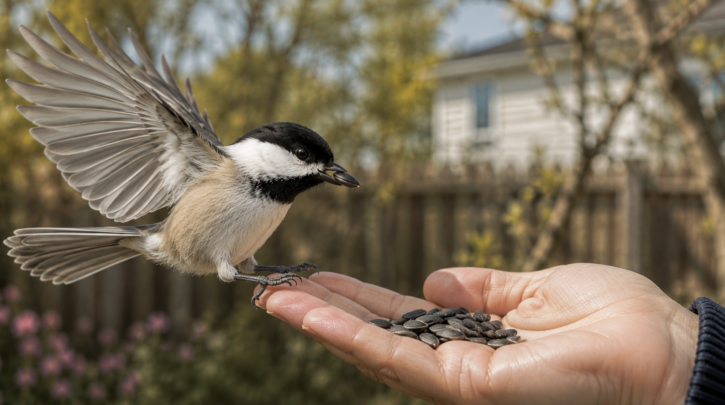
Once a local flock is comfortable and reliably visiting a feeder, patiently offering sunflower seed from an open palm near the existing feeder can gradually lead to genuine hand-feeding — consistency and stillness matter more than speed, and it can take repeated attempts before a bird commits to landing on a hand for the first time.
Why Chickadees Make a Good Starting Point
For anyone new to backyard birdwatching, chickadees are often recommended as a genuinely beginner-friendly species to start with — quick to discover new feeders, tolerant of observation at close range, and rewarding enough in personality and behavior to sustain interest well beyond the initial novelty of a new feeder.
Ready to put up your first feeder? Start with our suet feeder picks, then consider what native trees on your property might already be supporting more caterpillars than you realized.
A Realistic Timeline
Because chickadees are so quick to discover new feeders, results often come faster here than with many other species — it’s genuinely common to see chickadee activity within days of a new feeder going up, rather than the weeks or full season some other backyard birds might take to find and commit to a new location.
Avoiding Common Mistakes
- Filling a feeder exclusively with generic mixed birdseed instead of black oil sunflower
- Removing all dead or dying wood from a property, eliminating a genuine nesting option
- Using pesticides during spring and early summer, when insect availability matters most for chick-rearing
- Expecting hand-feeding success on the first attempt rather than building trust gradually over repeated visits
Final Thoughts
Chickadees reward relatively modest effort with genuinely rich behavior to observe, making them one of the most satisfying species to host well — whether or not hand-feeding ever becomes a lasting part of the relationship. Start simple, stay consistent with feeding and habitat, and the rest tends to follow on its own.