
Chickadees are genuinely easy to feed well — a short list of reliable foods covers essentially everything this species wants from a feeder, without the specialized freshness or sizing concerns some other backyard birds require.
Black Oil Sunflower: The Foundation
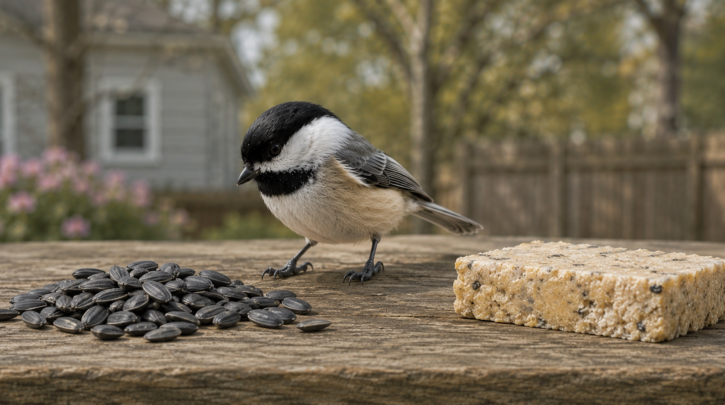
Black oil sunflower seed is the single most reliable chickadee feeder food, preferred over striped sunflower thanks to a thinner shell that’s easier to crack and a higher fat content per seed. A feeder stocked with black oil sunflower alone will draw consistent chickadee activity in almost any region where the species is present.
Suet
Suet is a close second in reliability, particularly valuable during the coldest stretches of winter when natural insect prey is completely unavailable. Standard suet works well most of the year, with a no-melt formulation worth switching to once temperatures climb into the range where regular suet begins to soften and spoil.
Suet Varieties
Plain suet performs perfectly well for chickadees, though blends with added nuts or dried insects can broaden appeal to a wider range of visiting species sharing the same feeder. Chickadees don’t show a strong preference for any particular suet variety the way some other backyard birds do.
Peanuts
Shelled or chopped peanuts offer a high-fat, high-protein option that chickadees take readily, particularly valuable during the demanding winter months when energy needs are highest relative to available daylight foraging time.
Mealworms
Live or dried mealworms are taken opportunistically by chickadees, though this species relies on them far less centrally than a bluebird does. Offering mealworms alongside sunflower and suet can add variety without being a required component of a chickadee feeding setup.
What Chickadees Generally Ignore
Like most of the seed specialists and semi-specialists, chickadees show little interest in cheap filler grains like milo or wheat, common in generic mixed birdseed blends. These fillers typically go untouched and end up scattered on the ground rather than eaten.
Freshness Matters Less Here Than for Nyjer
Unlike nyjer seed, which loses appeal fairly quickly as its oil content degrades, black oil sunflower and suet both hold up well over a more reasonable storage period, making chickadee feeding meaningfully lower-maintenance than hosting some of the more particular seed specialists covered elsewhere in backyard birding.
How Much to Offer
Because chickadees take one seed at a time and often cache rather than eat immediately, feeder activity can look lighter than the actual volume of food being consumed and stored nearby. A steadily but gradually emptying feeder is normal chickadee behavior, not a sign that birds aren’t actually using the food provided.
Ready to set up the right feeder for this feeding style? See our feeder setup guide for what actually matters in a chickadee-friendly design.
Buying in Bulk
Because black oil sunflower and suet both store reasonably well, buying in moderate bulk quantities is a practical way to reduce cost over a full feeding season without the freshness concerns that make bulk buying riskier for a food like nyjer seed.
Storage Tips
Keep sunflower seed in a sealed, rodent-resistant container in a cool, dry location, and store suet cakes at room temperature or refrigerated for extended shelf life, particularly for homemade batches without commercial preservatives.
Matching Food to Local Conditions
In regions with a strong local population of Boreal or Chestnut-backed Chickadees, natural conifer seed may already be abundant enough that feeder demand for sunflower runs lighter than in areas dominated by Black-capped or Carolina Chickadee, where feeder food often plays a larger relative role in the overall diet.
A Low-Maintenance Feeding Relationship Overall
Seed freshness, port sizing, hygiene urgency — chickadees ask less of a host than most other backyard birds, which is a large part of why this species is so often recommended as a reliable, low-stress starting point for anyone new to feeding birds.
Comparing Cost to Other Seeds
Because black oil sunflower is one of the least expensive quality feeder foods available, and suet cakes remain reasonably priced compared to specialty foods like nyjer, chickadee feeding tends to be one of the more budget-friendly, without sacrificing reliability or attraction success across a full calendar year.
Final Thoughts
Getting chickadee feeding right mostly comes down to two ingredients done consistently — fresh black oil sunflower and clean suet — rather than any elaborate or expensive setup, making this one of the more forgiving and genuinely low-cost feeding relationships found anywhere across all of backyard birding today.